OKRs vs. Traditional Performance Management: Which Framework Fits Your UAE Business?
“If you’ve sat in a leadership meeting recently and heard someone debate OKR vs performance management you’re not alone. It’s one of the most common questions we hear from growing businesses across the UAE, and the honest answer is: it depends on what problem you’re actually trying to solve.
Both OKRs (Objectives and Key Results) and traditional performance management systems aim to improve how a business executes but they do it in very different ways, and mixing them up is one of the most common reasons goal-setting efforts stall out by the second quarter.
What Traditional Performance Management Actually Does
Traditional performance management is built around ongoing evaluation typically annual or quarterly reviews, KPI tracking, and structured feedback between managers and employees. It answers the question: “How well is this person or team performing against their role expectations?”
This system is essential for:
- Tracking day-to-day operational health
- Managing compensation, promotions, and accountability
- Identifying underperformance early
- Maintaining consistent standards across departments
Where it tends to fall short is in driving change. A well-run performance management system can tell you that customer retention is at 82% but it doesn’t inherently push the organization toward a bigger, more ambitious outcome.
What OKRs Are Designed to Do Differently
OKRs exist to answer a different question: “Where do we want to go, and how will we know we got there?”
An Objective is a qualitative, ambitious goal something like “Become the most trusted HR partner for SMEs in the UAE.” The Key Results underneath it are the measurable outcomes that prove you’re getting there client retention rate, number of new enterprise clients, employee satisfaction score, and so on.
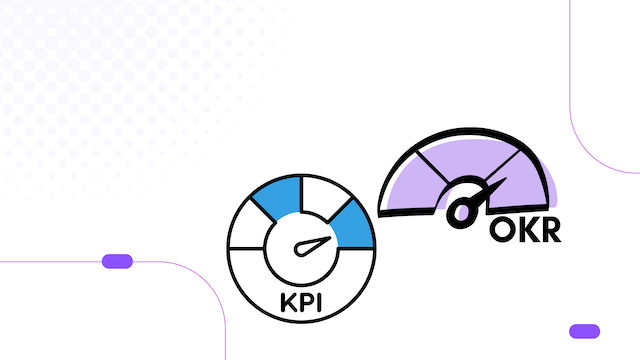
The key difference: OKRs are strategic and time-bound (usually quarterly), while performance management is ongoing and role-based. OKRs push an organization forward; performance management keeps the day-to-day running well.

OKR vs Performance Management: Which Does Your Business Need?
For most UAE businesses especially SMEs and scale-ups the answer isn’t “one or the other.” It’s understanding which problem you’re solving right now:
Choose Performance Management focus if:
- You’re struggling with role clarity or accountability
- Compensation and promotion decisions feel inconsistent
- You need better day-to-day visibility into team performance
- You don’t yet have basic KPI tracking in place
Choose OKR Implementation focus if:
- Your team is busy but not clearly moving toward strategic goals
- Departments are working in silos with conflicting priorities
- Leadership has a vision that isn’t translating into action
- You’ve outgrown “everyone just does their job” and need alignment across a larger team
Most growing organizations eventually need both a performance management foundation that keeps operations healthy, with OKRs layered on top to drive strategic focus during specific growth phases.
A Common Mistake We See in the UAE Market
One of the most frequent issues we encounter with businesses adopting either framework is treating it as a documentation exercise rather than a management discipline. Objectives get written once at the start of the quarter and never revisited. KPIs get tracked in a spreadsheet nobody opens. Both frameworks only work when they’re built into how the business actually operates regular check-ins, leadership visibility, and a willingness to adjust when priorities shift.
Getting Started
If you’re unsure which framework or combination makes sense for your business, that’s exactly the kind of question worth a short conversation rather than guesswork. At Zephora Consulting, we help UAE businesses implement both OKR frameworks and performance management systems tailored to where the business actually is today not a generic template.
Book a free consultation to talk through what’s actually holding your team back from executing at the level you need.