OKR vs KPI UAE: Which Framework Fits Your Business
If you’ve been researching performance frameworks for your business, you’ve probably run into the OKR vs KPI debate more than once. In the UAE, where companies are under constant pressure to scale fast and show results, this question comes up in almost every leadership meeting: do we need OKRs, KPIs, or both?
The honest answer is that most businesses don’t need to pick a side. They need to understand what each one actually does, because they solve different problems.
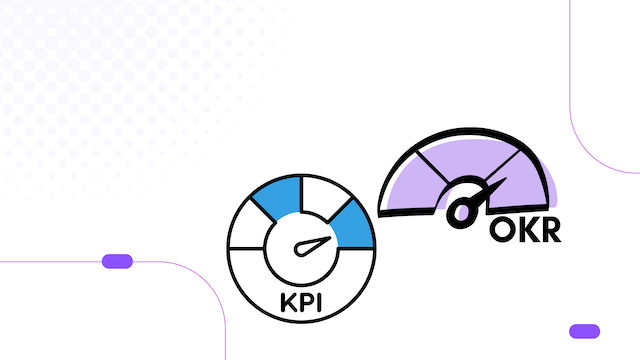
What’s the Real Difference Between OKR vs KPI in UAE?
KPIs (Key Performance Indicators) measure how well something is currently running. They’re numbers that tell you if the business is healthy revenue growth, customer retention, response time, conversion rate. KPIs are ongoing. They don’t have a start or end date; they just keep getting tracked, month after month, year after year.
OKRs (Objectives and Key Results) are different. They’re a goal-setting framework built around ambition and change. An Objective is where you want to go something bold and specific. The Key Results are how you’ll know you got there. Unlike KPIs, OKRs are time-boxed, usually set every quarter, and designed to push a team past business-as-usual.
Think of it this way: KPIs tell you how the plane is flying right now. OKRs tell you where you’re trying to land it next.

Why This Confuses So Many UAE Businesses
A lot of companies in the UAE adopt OKRs because they’ve heard Google or a fast-growing startup uses them, then try to force every existing KPI into an “Objective” and “Key Result” box. That’s where things fall apart. Not every metric deserves to be a company-wide objective, and not every ambitious goal can be reduced to a single ongoing number.
The confusion usually shows up in one of these ways:
- Treating KPIs like OKRs. “Increase monthly revenue” isn’t an Objective it’s a KPI dressed up in OKR language. There’s no real stretch or focus behind it.
- Treating OKRs like KPIs. Trying to track OKRs every single day the way you’d track a KPI dashboard defeats the purpose. OKRs need room to breathe over a quarter.
- Using neither correctly. Some businesses set vague goals with no clear metric attached to either framework, so nobody can say whether they actually hit the target.
So Which One Does Your Business Need?
Here’s the short version:
- Use KPIs when you need to monitor the ongoing health of your business sales numbers, employee turnover, customer satisfaction, operational efficiency. These should already exist regardless of what growth framework you choose.
- Use OKRs when you need to drive a specific, time-bound push toward a bigger goal launching in a new market, overhauling a process, hitting an ambitious growth target this quarter.
- Use both when you’re serious about scaling. This is the setup that works best for most UAE SMEs and growing companies. KPIs keep the lights on. OKRs make sure the business is actually moving forward, not just staying afloat.
The two aren’t competitors. A well-run business uses KPIs as the baseline and OKRs as the growth engine on top of it.
Common Mistakes UAE Companies Make When Choosing
- Copying a framework because a competitor uses it, without asking whether it fits the team’s size or maturity.
- Rolling out OKRs company-wide overnight instead of piloting with one department first.
- No ownership. Frameworks fail fast when nobody is accountable for tracking and reviewing them.
- Setting too many OKRs at once. Three to five per team, max. More than that isn’t focus, it’s a to-do list wearing a fancier name.
How Zephora Consulting Helps
Choosing between OKR and KPI in the UAE isn’t really about picking the trendier framework it’s about matching the right tool to what your business actually needs right now. At Zephora, we help UAE businesses design performance systems that combine both: KPIs to track the business as it runs, and OKRs to push it toward where it needs to go next.
If you’re not sure where your business currently stands, our OKR Consulting UAE guide is a good next read, or you can go straight to our Performance Management Consulting services to see how we build this for teams like yours.